A professional hoarding cleanup service includes private planning, safe sorting, removal, cleaning, and space restoration. The team reviews the property, finds risks, protects important belongings, and removes unwanted items with care. The goal is a safer, cleaner home that respects the resident’s choices and needs.
Table of Contents
- What Does a Professional Hoarding Cleanup Service Include?
- How Does the Hoarding Cleanup Process Begin?
- What Safety Measures Are Used During Hoarding Cleanup?
- How Are Items Sorted During a Hoarding Cleanout?
- Does Hoarding Cleanup Include Deep Cleaning and Sanitizing?
- How Long Does a Professional Hoarding Cleanup Take?
- What Should You Expect After a Hoarding Cleanup Service?
- Frequently Asked Questions
- Key Takeaways
- Conclusion
What Does a Professional Hoarding Cleanup Service Include?
A professional hoarding cleanup service includes more than taking items away. It may include a property review, a written work plan, careful sorting, removal, disposal, basic cleaning, and help with space restoration. The work depends on the home’s condition, the resident’s wishes, and any safety risks.
Initial property assessment and cleanup planning
The first step is a private review of the property. The team checks rooms, walkways, doors, stairs, utilities, moisture, pests, and visible damage. This helps the crew choose safe work areas and bring the right tools.
A cleanout service helps remove unwanted items from a property. It leaves the space ready for its next use. In a hoarding situation, the plan must allow time for choices. A rushed cleanup can cause stress and may lead to important items being lost.
Portsmouth New Hampshire Junk Removal can help homeowners, property owners, and professionals understand which services fit the property. The team can also explain the work before it starts. This can help with inherited homes, rental units, estates, foreclosures, and properties being prepared for sale.
Sorting, removal, cleaning, and space restoration
A full-service junk removal company may handle items from garages, attics, basements, kitchens, bedrooms, and outdoor areas. Crews may remove furniture, appliances, mattresses, boxes, damaged materials, and household waste. Large items, such as hot tubs, may need a special plan because of their size and location.
After removal, the crew can sweep, vacuum, and wipe surfaces. They can also point out areas that need deeper work. Hoarding cleanup may uncover damaged drywall, floors, plumbing, wiring, or cabinets. Licensed professionals usually handle those repairs as a separate job.
How Does the Hoarding Cleanup Process Begin?
The process begins with a private talk and a safety review. A professional team learns who owns the property, who lives there, what must stay, and which areas need urgent help. The team then sets clear goals instead of treating every item as ordinary junk.
Private consultation and safety evaluation
A respectful talk should not include blame. Hoarding disorder is a mental health condition that can make it hard to discard possessions. A junk removal crew is not a therapist. Still, a kind team can work at a calm pace and follow the plan made by the resident, family, case manager, or property owner.
The safety review checks for blocked exits, unstable piles, broken glass, sharp objects, spoiled food, mold-like growth, animal waste, insects, rodents, leaks, and weak floors. It also checks if workers can move through the property without causing more damage.
A homeowner may safely handle simple upkeep when a room is clear and no hazards are present. Light dusting, normal cleaning, and placing small items into labeled boxes may be suitable for do-it-yourself work. A professional is needed when access is blocked, waste may be contaminated, heavy items must move, or the structure may be unsafe.
Creating priorities for residents, owners, and professionals
The plan should deal with urgent needs first. Clear paths to doors, stairs, bathrooms, bedrooms, and utility controls often come before surface cleaning. If the home belongs to an estate or landlord, the responsible people should agree on who can approve removal.
A useful plan may divide the work into rooms or zones. It may also mark items for review, donation, recycling, or disposal. This keeps the work easier to follow. It also gives the resident more control during the cleanout.
What Safety Measures Are Used During Hoarding Cleanup?
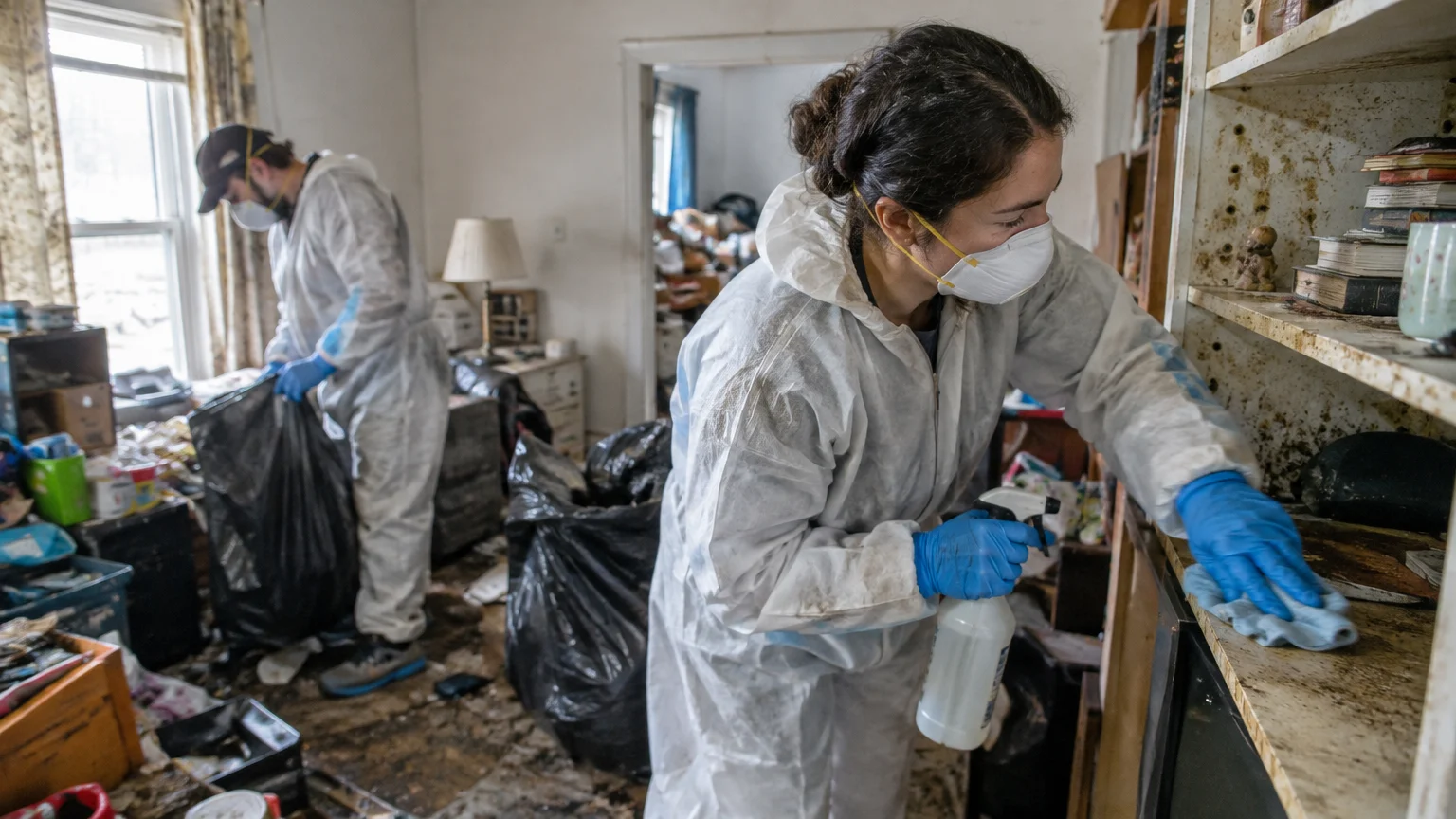
Safety measures may include gloves, protective clothing, eye protection, masks when suitable, careful lifting, and limited access to unsafe areas. Workers should stop and report serious hazards instead of forcing their way through a room. A professional junk removal service also uses safe loading methods for heavy or unstable items.
Personal protective equipment and controlled removal
Personal protective equipment, or PPE, means clothing and gear used to lower exposure to hazards. Depending on the conditions, workers may use gloves, sturdy shoes, eye protection, coveralls, and breathing protection. PPE does not make every space safe. The work area still needs a careful review.
Controlled removal means items leave in a planned order. Crews may clear a path first and remove unstable objects next. They can then work through each zone. This lowers the risk of falling items, blocked exits, trips, and injuries. Large furniture, appliances, and mattresses should be moved with enough workers and proper tools.
Identifying biohazards, structural concerns, and restricted areas
A biohazard is a biological material that may spread illness or cause harm. Examples include human waste, animal waste, blood, spoiled food, and some contaminated materials. When these conditions are found, special cleaning may be needed instead of ordinary junk removal.
Structural concerns may include sagging floors, water damage, exposed wires, broken stairs, or blocked heating equipment. Restricted areas should stay closed until the right trade or agency reviews them. Pest control, mold treatment, electrical work, and repairs may need separate providers.
Portsmouth New Hampshire Junk Removal serves the main Portsmouth area, from Downtown Portsmouth and Atlantic Heights to Rye, Newington, Greenland, Kittery, and nearby communities. Local building age, access, weather, and disposal rules can affect the work plan. The crew should explain any limits before removal starts.
How Are Items Sorted During a Hoarding Cleanout?
Items are sorted with the resident or an approved decision-maker whenever possible. Common groups include keep, review, donate, recycle, dispose, and special handling. Sorting gives important belongings a chance to be found. It also helps prevent useful items from being discarded by mistake.
Separating belongings, donations, recyclables, and waste
The team may use labeled rooms, containers, or marked areas for each group. Furniture, clothing, books, papers, electronics, appliances, and household goods may each need a different next step. Recyclable materials should be separated when practical. Broken or contaminated items may need disposal.
Appliances should not be left beside a curb unless local rules allow it. A professional crew can explain how old appliances are handled and whether they need special preparation. Refrigerators, freezers, washers, dryers, and other large items may need separate transport or recycling plans.
Mattress removal services can help when beds are damaged, stained, infested, or no longer usable. A mattress may need special handling because of its size and condition. The same care may apply to sofas, cabinets, exercise equipment, and outdoor items.
Respecting decisions about sentimental or important items
Family papers, photos, legal records, jewelry, medicine, cash, and personal documents need careful attention. The resident or approved person should decide what happens to items with emotional or legal value.
A crew should not assume that an old item has no value. It can place uncertain items in a review area and return to them later. This slower step can protect trust. It can also make the cleanup feel easier to manage.
Does Hoarding Cleanup Include Deep Cleaning and Sanitizing?
Some hoarding cleanup projects include basic cleaning. Deep cleaning and sanitizing may need a separate service. The team can remove loose waste, dust, and unwanted items, then identify surfaces that need more work. The final plan depends on contamination, moisture, pests, odors, and damage.
Removing odors, dust, and surface contamination
After items are removed, dust and trapped odors may be easier to address. Crews may sweep, vacuum, wipe hard surfaces, and remove odor sources. Soft items, flooring, insulation, and wall materials may hold odors. These materials may need replacement or special treatment.
Sanitizing means reducing harmful germs on a cleaned surface with a suitable product. It is not the same as covering an odor with fragrance. Surfaces must be cleaned first. Products must also be used as directed. Heavy contamination may require a trained cleanup provider.
Addressing affected floors, fixtures, kitchens, and bathrooms
Kitchens and bathrooms need close review because leaks, spoiled food, waste, and moisture can affect many surfaces. The team may remove damaged cabinets, blocked fixtures, old appliances, and floor coverings. It should not disconnect utilities or perform regulated repairs without proper training.
Floors may need sweeping, washing, repair, or replacement. Walls and ceilings may need a review after piles are removed. If pests, mold, sewage, or strong contamination are found, the property owner should arrange the right specialist before normal use begins again.
How Long Does a Professional Hoarding Cleanup Take?
A professional hoarding cleanup may take part of a day, several workdays, or longer. The timeline depends on the amount of material, the number of rooms, access, sorting needs, safety risks, disposal needs, and follow-up cleaning. A reliable team confirms the work order after reviewing the property.
Factors that affect the project timeline
A clear home with easy driveway access may move faster than a packed home with narrow halls and blocked doors. Sorting also takes longer when the resident wants to review many belongings. Stairs, long carrying paths, limited parking, and large appliances can add work.
Hazards can pause removal. Workers may need to wait for pest control, electrical repairs, a structural review, or special sanitation. Weather can also affect outdoor piles, trailers, and unsafe walking areas. These limits should be explained early.
Coordinating access, removal, disposal, and follow-up work
Access should be planned before the crew arrives. The owner or resident may need to provide keys, unlock gates, move vehicles, secure pets, and mark rooms that must stay closed. If several professionals are involved, their schedules should follow a safe order.
The last step is a walk-through. It confirms what was removed, what remains, and which repairs or cleaning tasks are still needed. A clear handoff helps prepare the property for residents, buyers, renters, estate managers, or contractors.
What Should You Expect After a Hoarding Cleanup Service?
After a hoarding cleanup service, the property should have clearer paths, less clutter, and a plan for remaining work. Results vary by project, but the goal is a safer and more usable space. The team should explain any areas that could not be entered, cleaned, or repaired.
Property-ready results for homes, estates, and rentals
A property-ready cleanout does not always mean the home is fully repaired. It means unwanted materials were handled as planned, access improved, and next steps became easier to see. An estate may still need painting, flooring, appliance work, or document review.
For a rental, the owner may need repairs and a safety check before a new tenant moves in. For an inherited home, family members may need time to review papers and personal items. For a sale, the property may need more work before it is listed.
Portsmouth New Hampshire Junk Removal helps property owners plan practical cleanup work and nearby communities. The team can discuss whole house cleanout needs, furniture removal, appliance removal, and junk removal and hauling as parts of one larger plan.
When to arrange repairs, pest control, or ongoing support
Repairs should follow the cleanup when damage becomes visible. Pest control may be needed when insects, rodents, nests, or droppings are found. A licensed contractor may need to review wiring, plumbing, heating, floors, roofing, or structural damage.
Ongoing support can help stop the space from becoming unsafe again. A resident may benefit from help from family, a case manager, a mental health provider, or another trusted person. Cleanup alone does not address every reason clutter returned.
Frequently Asked Questions
What is a cleanout service?
A cleanout service removes unwanted items from a home, rental, estate, or other property. It may include sorting, lifting, loading, hauling, and basic sweeping. In a hoarding situation, the work also needs private planning, resident approval, and extra care around personal items and possible hazards.
How are old appliances disposed of?
Old appliances are usually removed, transported, recycled, or disposed of under local rules. Refrigerators and freezers may need special handling. A professional junk removal service can review the appliance, access route, and local disposal rules before moving it. Repairs and utility disconnections should be handled by qualified professionals.
How can someone get rid of a hot tub?
A hot tub often needs to be drained, disconnected, taken apart, and carried out in sections. The work may involve tight gates, decks, stairs, wiring, plumbing, and heavy materials. A homeowner should not cut wires or remove structural parts without the right skills. A professional crew can plan the removal safely.
Can one crew clear a garage, attic, and basement?
Many full-service junk removal companies can coordinate several areas in one project. Access and safety must be reviewed first. Attics may have weak floors, basements may have narrow stairs, and garages may contain chemicals or heavy tools. The crew should confirm the work plan before starting.
Is hoarding cleanup the same as ordinary junk removal?
No. Ordinary junk removal often focuses on selected items. Hoarding cleanup may involve blocked paths, hard choices, contamination, pests, and emotional stress. A hoarding cleanup service adds careful sorting, safety planning, privacy, and coordination with other professionals when needed.
Key Takeaways
- Planning comes first: The team reviews safety, access, priorities, and items that must stay.
- Sorting needs patience: Belongings, donations, recycling, waste, and special items should be separated.
- Safety matters: PPE, controlled removal, and hazard checks help protect residents and workers.
- Cleaning may need specialists: Mold, pests, sewage, repairs, and heavy contamination can require other providers.
- The goal is usable space: Homes, estates, rentals, and other properties become easier to repair and manage.
Conclusion
A professional hoarding cleanup service joins respectful planning with safe removal and practical cleaning. It can clear blocked rooms, protect important belongings, and prepare a home for repairs or future use. The best process gives the resident or property owner a clear role in each decision.
For families and property owners, Portsmouth New Hampshire Junk Removal can help plan the next step. Find out more about our estate cleanout in Portsmouth. Contact us to discuss a hoarding cleanup or larger property cleanout plan.