How to get rid of old appliances depends on whether they work, how large they are, and how they connect to your home. Working appliances may be donated or sold. Broken units may need recycling or professional pickup. Safe planning helps protect people, floors, walls, and the environment in Portsmouth.
Table of Contents
- What Is the Best Way to Get Rid of Old Appliances?
- Can You Recycle Refrigerators, Washers, and Dryers?
- How Should You Prepare an Appliance for Removal?
- How Do You Get Rid of an Old Refrigerator?
- How Do You Get Rid of an Old Washer or Dryer?
- Can You Donate or Sell Old Appliances?
- How Much Does Appliance Removal Usually Cost?
- What Happens During Professional Appliance Pickup?
- What Should You Do With Other Household Appliances?
- How Can You Choose a Responsible Appliance Removal Company?
- Frequently Asked Questions
What Is the Best Way to Get Rid of Old Appliances?
The best choice depends on the appliance’s condition, size, and weight. A working unit may be right for donation or resale. A broken unit may need a recycling center or a household junk removal company. Local rules can also affect your choice.
Choosing between donation, resale, recycling, and removal
Donation is best for an appliance that is clean, safe, and ready to use. Some groups accept only certain brands or models. Some also ask the owner to deliver the item. A group may refuse an appliance with rust, water damage, missing parts, or poor performance.
Selling may work when the appliance runs well and has a clear history. List the brand, model, age, condition, and pickup needs. Be honest about leaks, damage, repairs, or missing parts. Buyers need clear facts before they agree to take the appliance.
Recycling is often the right choice for a broken appliance. These units contain metal, plastic, glass, wire, and other useful parts. A recycling center can sort these materials and send them through the right process.
When professional appliance pickup makes the most sense
Professional pickup can help when an appliance is heavy, large, or hard to move. This often includes refrigerators, washers, dryers, freezers, ovens, and dishwashers. Stairs, narrow doors, and long paths to the truck can make the job unsafe for one person.
Portsmouth New Hampshire Junk Removal can help homeowners review their options. The team can look at the appliance, access route, and removal needs. This helps the owner make a safer plan before the work begins.
Can You Recycle Refrigerators, Washers, and Dryers?
Yes, many refrigerators, washers, and dryers can be recycled. A recycling center first removes parts that need special care. The metal and other materials can then be sorted for processing. Acceptance rules vary by location, so ask before delivery.
How appliance recycling works
Appliances contain several types of material. A washer may have steel, aluminum, plastic, wire, and electronic parts. A dryer may also contain heating parts and insulation. Recycling keeps these materials separate from regular household waste.
A large appliance may be collected by a recycling center, retailer, utility program, or removal company. Each provider has its own rules. Ask where the appliance will go and whether the provider accepts that model.
Recycling does not mean you should take the appliance apart. Taking it apart can expose sharp edges, electrical parts, stored energy, or chemicals. Trained workers have the tools and steps needed for this work.
Why refrigerators require special handling
Refrigerators may contain refrigerant. Refrigerant is a chemical that keeps the inside cold. A trained technician must recover it before the refrigerator is processed. Do not cut lines, puncture coils, or remove the compressor yourself.
The U.S. Environmental Protection Agency explains refrigerator and air-conditioning refrigerant rules for workers and businesses that handle these materials. Choose a provider that understands these rules and uses an approved recycling or disposal path.
How Should You Prepare an Appliance for Removal?
Start by making the appliance empty, dry, and easy to reach. Homeowners can handle simple cleaning and clearing work. Leave gas lines, water lines, refrigerant lines, and hardwired electrical work to trained professionals.
Disconnecting water, electricity, and gas safely
You may unplug a small appliance when the plug is easy to reach and the cord looks safe. Pull the plug itself, not the cord. If the unit is hardwired, connected to gas, or linked to water, use qualified help.
Turn off water valves before moving a washer or dishwasher. Some water may remain in the hoses. Keep towels and a shallow pan nearby. Do not force a stuck connection. Gas appliances need extra care because a damaged line can cause a serious hazard.
Clearing a path from the appliance to the exit
Remove boxes, rugs, toys, and other objects from the route. Measure narrow doors and tight turns before pickup. Open doors fully when possible. Protect corners that could be scratched during the move.
You can clean loose dirt from the appliance and remove food, lint, shelves, and racks. Tape loose doors only when the removal team asks you to do so. Do not leave a refrigerator door shut for long if children or pets can reach it.
Use this simple preparation checklist:
- Empty food, clothing, dishes, and other contents.
- Unplug the appliance only when it is safe to do so.
- Shut off water or gas through qualified help when needed.
- Clear the path from the appliance to the exit.
- Tell the pickup team about stairs, gates, tight turns, and hazards.
How Do You Get Rid of an Old Refrigerator?
The safest way to get rid of an old refrigerator is through recycling, retailer take-back, or professional pickup. Refrigerators are heavy and may contain refrigerant. Do not place one with regular trash until you check the local rules.
Removing food, shelves, and loose parts
Remove all food from the refrigerator and freezer. Let ice melt in a controlled way, then dry the inside. Take out shelves, drawers, bins, and door racks if they come out without force.
Keep small parts with the refrigerator when possible. Wrap any cracked or sharp shelf with care. Tell the pickup team about it. Remove magnets, papers, and items stored on top. The unit should be empty before it moves.
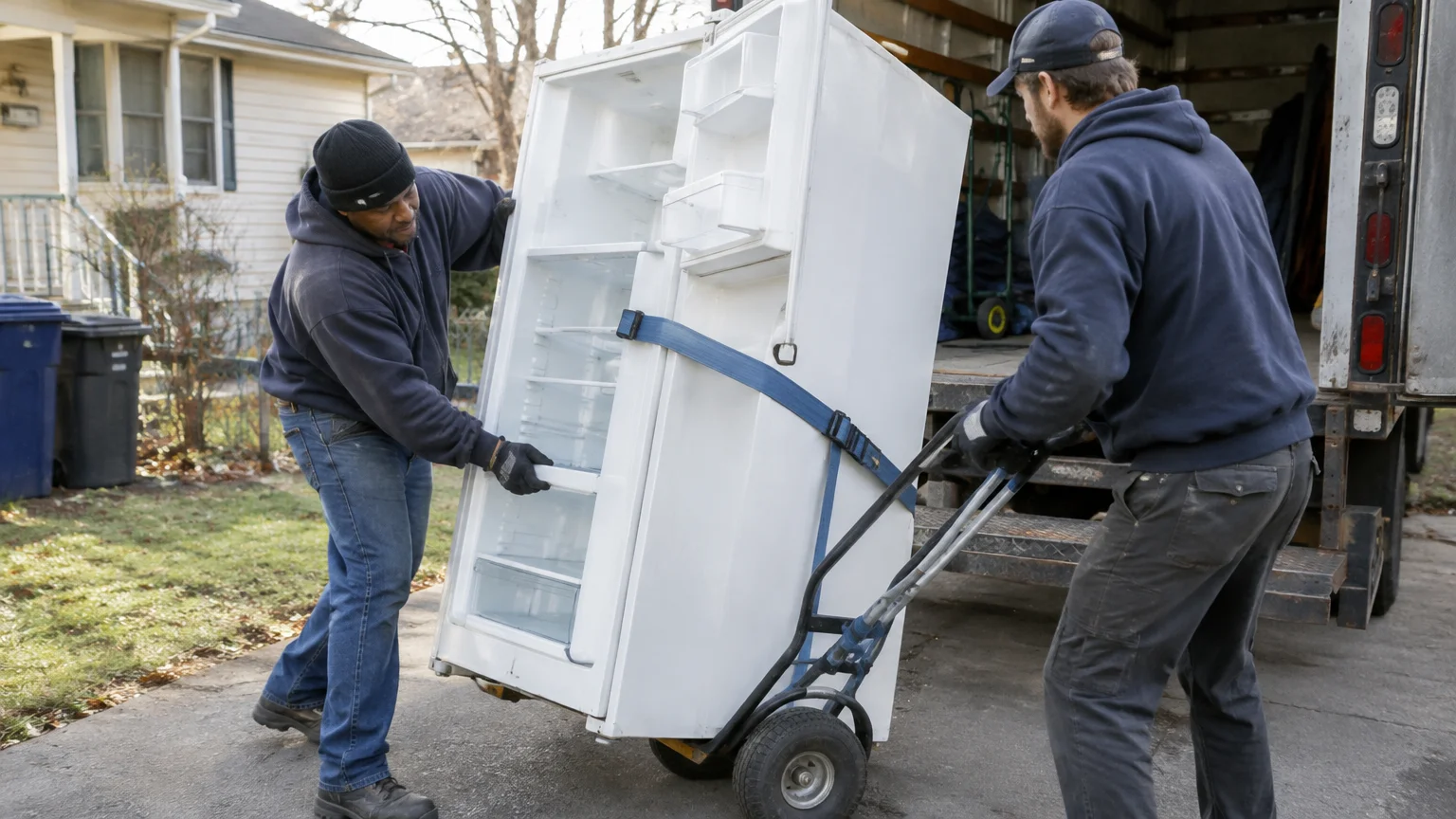
Do not move a refrigerator alone. Its weight may shift without warning. A hand truck, straps, and more than one person may be needed. Keep the unit upright when possible and follow the maker’s instructions.
Handling refrigerants and other regulated components
Refrigerant must be recovered before a refrigerator is recycled or disposed of. The compressor, oil, wire, and insulation may also need special handling. Never puncture the cooling system or remove these parts at home.
Old freezers and beverage coolers may need the same care. A local recycling program may have different rules. Portsmouth New Hampshire Junk Removal can help Portsmouth residents plan for refrigerators, freezers, and coolers that need special handling.
How Do You Get Rid of an Old Washer or Dryer?
An old washer or dryer may go to an appliance recycler, retailer take-back program, or removal team. The washer must be drained and disconnected safely. A dryer must first be identified as gas or electric.
Preparing washing machines for pickup
Remove clothing and detergent from the washer. Run a drain cycle if it still works and is safe to use. Then shut off the water supply and disconnect the hoses through the proper process.
Water may remain in the drum or drain hose. Keep the hose raised or place it in a container during removal. Secure the lid or door only as directed. Do not force a stuck drum or move a machine that leaks badly.
Washers are dense and hard to carry. Their weight can harm stairs, floors, or a person’s back. A removal team can use proper tools and plan the route before lifting.
Safety considerations for gas and electric dryers
A gas dryer should be disconnected by a qualified professional. The gas valve must be closed, and the connection should be checked for damage. Never cut or cap a gas line without proper training.
An electric dryer may use a high-voltage connection. If it is hardwired or the outlet is damaged, electrical help is safer. Clean lint from the filter and remove clothing before pickup. Do not open the dryer cabinet.
Can You Donate or Sell Old Appliances?
You can donate or sell an appliance when it is clean, safe, complete, and useful. Broken, unsafe, recalled, or badly damaged appliances are better suited for recycling or removal.
When an appliance may be suitable for reuse
A working appliance may help another home, rental property, workshop, or community group. It should start, run, drain, cool, heat, or dry as intended. Tell the next owner about known problems.
Donation groups often have rules about age, condition, pickup, and ownership. Some accept only certain appliances. Others may not take refrigerators or gas units because they need special care. Check first to avoid a failed drop-off.
What to check before listing or donating it
Clean the appliance inside and outside. Find the model and serial information. Write down its age, repairs, missing parts, strange sounds, and leaks.
A listing should say whether the buyer must arrange transport. Large appliances are difficult to move, and many buyers need help. If there is no suitable buyer or donation group, local junk removal may be a practical next step.
People may also read company reviews before arranging pickup. Look for comments about communication, arrival planning, safe handling, and cleanup. These details are more useful than vague claims.
How Much Does Appliance Removal Usually Cost?
Appliance removal costs vary based on the appliance, access, labor, disposal needs, and local rules. A small item near an exit is usually simpler than several heavy units in a basement. The final cost is confirmed on a quote after the provider reviews the job.
What factors affect the cost of appliance removal
The main factors include the number of items, size, weight, stairs, distance from the truck, and condition. A refrigerator that needs special handling may require a different process than a simple metal appliance. Narrow doors and long carry routes can add work.
Urgent timing, hard access, and extra household junk may also change the job. Explain these details before scheduling. Clear information helps the provider prepare a more accurate quote.
How appliance pickup compares with other disposal options
Retailer take-back may help when you buy a replacement, but its rules vary. A recycling center may accept the appliance but require you to deliver it. Donation may work for a clean unit but not for a broken one.
Professional pickup can be a simpler choice for heavy or awkward appliances. It can reduce lifting, transport, and sorting work for the homeowner. Portsmouth New Hampshire Junk Removal serves the main Portsmouth area, including Downtown Portsmouth, Atlantic Heights, Rye, Newington, Greenland, Kittery, and nearby communities.
What Happens During Professional Appliance Pickup?
During professional pickup, the team reviews the appliances, route, and removal plan. Workers then move the items with suitable tools and load them for the next step. Tell the team about fragile floors, narrow turns, gates, pets, and other concerns.
What homeowners can expect on pickup day
The team may confirm the items included before work starts. It may also check whether the appliances are empty and disconnected. If an item is unsafe to move, the team should explain the concern first.
Workers may use a hand truck, straps, pads, and protective gear. They should explain any change in the work plan. The job may take longer when appliances are in a basement, behind other items, or near fragile surfaces.
You do not need to take the appliance apart. Doing so may create sharp edges or expose parts that need special care. The team can decide which steps are safe.
How removal teams protect floors, walls, and doorways
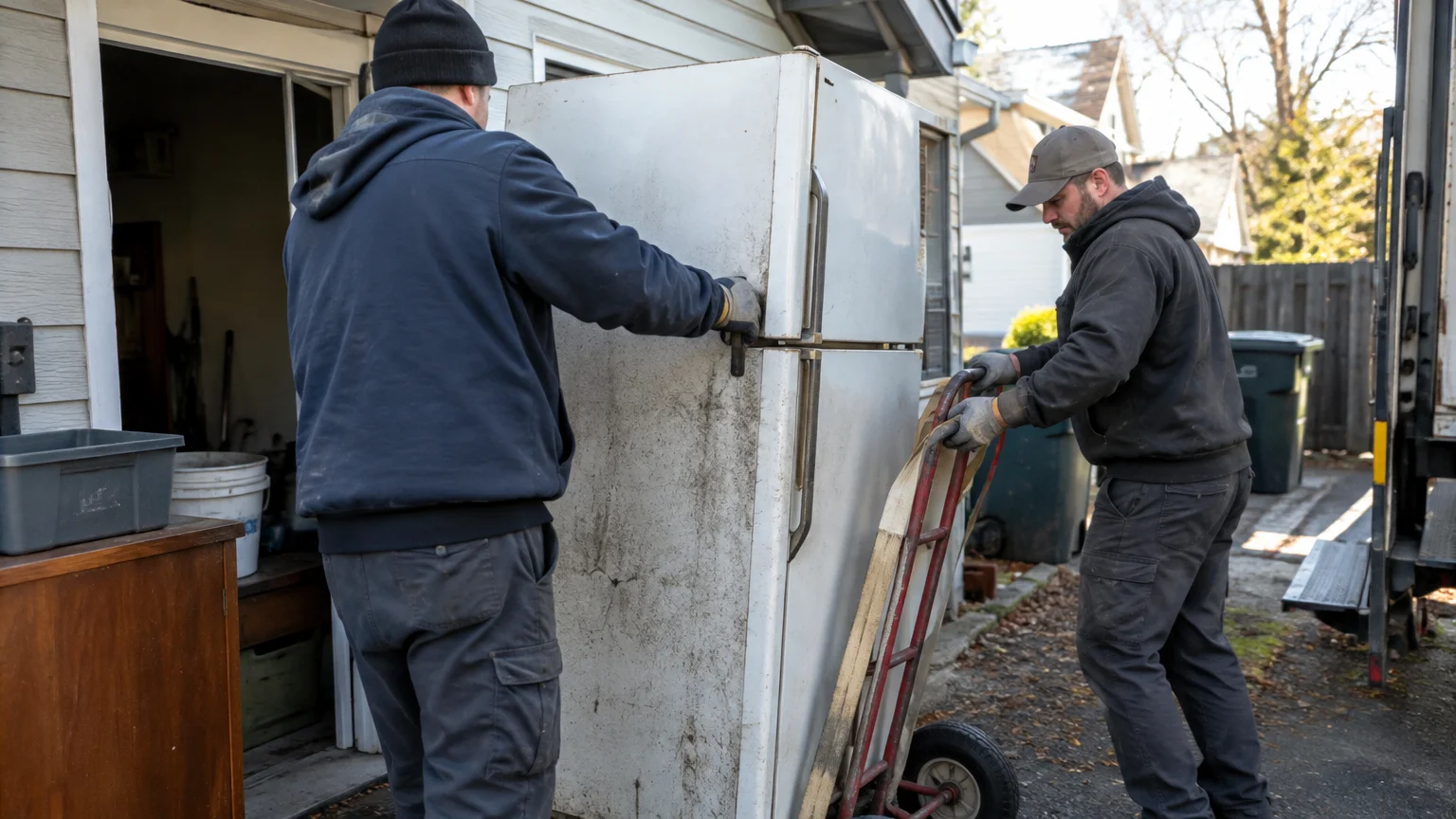
Good planning helps prevent damage. Workers may cover floors, pad corners, use door protection, and choose a route with fewer turns. They should not drag heavy appliances across finished flooring.
You can help by clearing the path before the team arrives. Keep children and pets away from the work area. After loading, the team should check for loose debris and leave the area neat.
What Should You Do With Other Household Appliances?
Dishwashers, ovens, microwaves, freezers, and small appliances may also need special care. The right choice depends on whether the item works, how it connects, and what materials it contains.
Disposing of dishwashers, ovens, microwaves, and freezers
Dishwashers may hold water in their hoses or base. Some are hardwired under a counter. A qualified person should handle electrical and water connections before removal.
Ovens may be gas or electric. Gas ovens need safe disconnection. Electric ovens may use a high-voltage connection. Microwaves contain electrical parts and should not be taken apart at home.
Freezers are similar to refrigerators because they may contain refrigerant. Empty the unit, keep the door safe, and ask the recycling or pickup provider about its rules.
Separating appliances with electronics or hazardous materials
Some appliances contain circuit boards, batteries, oils, refrigerants, or other parts that should not enter regular trash. Tell the provider about unusual items, leaks, damage, or attached electronics.
Small appliances may fit a local electronics recycling program, but rules vary. Do not mix unsafe items with ordinary household junk. When unsure, ask the provider before placing the item at the curb.
How Can You Choose a Responsible Appliance Removal Company?
A responsible company explains the plan, handles appliances safely, and gives clear information about reuse, recycling, and disposal. Choose a provider that understands heavy lifting and special appliance needs.
Questions to ask about recycling and disposal
Ask these questions before scheduling:
- Does the company accept refrigerators, freezers, washers, dryers, and ovens?
- How does the company handle refrigerant and gas-connected appliances?
- Are suitable appliances taken to a recycling or reuse partner?
- Does the team handle stairs, narrow doors, and long carry routes?
- What details are needed before the quote is confirmed?
- Will the work area be checked for loose debris after pickup?
Clear answers are more useful than broad promises. The company should explain its limits before the appointment. It should not tell homeowners to make unsafe disconnections.
Key takeaways for a simpler appliance cleanout
- Working appliances may be donated or sold.
- Broken units often need recycling or professional removal.
- Refrigerators and freezers need special care because they may contain refrigerant.
- Gas and hardwired appliances should be disconnected by qualified help.
- Clear paths and safe planning help prevent injury and property damage.
Portsmouth New Hampshire Junk Removal helps homeowners plan appliance pickup and cleanouts. Contact us today to arrange a safe appliance collection.
Frequently Asked Questions
How do you get rid of a fridge?
Empty and dry the fridge, then arrange retailer take-back, recycling, or professional pickup. Do not cut cooling lines or remove the compressor. Refrigerant needs proper recovery before recycling. A removal provider can handle the heavy lifting and help send the refrigerator through an approved process.
What happens to old appliances?
Old appliances may be donated, reused for parts, recycled, or sent through an approved disposal channel. Working units may serve another home. Broken units are often sorted for metal, plastic, wire, and other materials. The final path depends on the appliance and local rules.
Can a homeowner recycle a washer or dryer?
A homeowner may be able to take a washer or dryer to a recycling facility, but rules differ. The appliance must be disconnected safely and moved without injury or property damage. Professional pickup may be simpler when the unit is heavy, upstairs, hardwired, or connected to gas.
What is a cleanout service?
A cleanout service removes unwanted items from a home, room, garage, attic, basement, or property. It may include sorting, carrying, loading, and sending items toward reuse, recycling, or disposal. Appliance pickup is one part of a larger residential or commercial cleanout.
How do you get rid of a hot tub?
A hot tub usually needs a separate removal plan because it is large, heavy, and often connected to electrical and plumbing systems. A qualified person should disconnect utilities first. The shell may need to be cut apart by trained workers. Ask the removal company about access and disposal steps.
If you are unsure what to do with an old appliance, review the condition, connections, access route, and local recycling rules first. These steps can help you choose between donation, recycling, and professional junk removal without unnecessary risk.
If you are not sure what you are dealing with, it is worth having someone look at it before it turns into a bigger job. Get in touch with Portsmouth New Hampshire Junk Removal today and we will tell you where you stand.