A drywall removal service includes safe tear-out, loading, hauling, and cleanup of old drywall, plaster, and related debris. The work may cover one room, a full home, or a job site. Portsmouth New Hampshire Junk Removal can help property owners plan removal around access, safety, debris type, and project timing.
Table of Contents
- What Does a Drywall Removal Service Include?
- What Types of Drywall and Plaster Can Be Removed?
- How Is Drywall Removed Safely From a Home?
- How Does Drywall Removal Work on a Construction Job Site?
- How Is Drywall Debris Sorted, Loaded, and Disposed Of?
- How Does Drywall Hauling Compare With Broader Construction Cleanup?
- When Should You Hire a Professional Drywall Removal Service?
- Key Takeaways
- Frequently Asked Questions
- Conclusion
What Does a Drywall Removal Service Include?
A drywall removal service often includes planning, tear-out, loading, hauling, and final cleanup. The exact work depends on the room size, wall condition, access, and debris type. A clear plan helps keep the job safe and orderly.
Initial assessment and removal planning
The first step is a look at the work area. The crew checks walls, ceilings, doors, stairs, walkways, and nearby surfaces. This helps them choose the best path for carrying debris from the property.
The crew may also ask if the drywall is loose or still attached. Attached drywall needs careful removal with hand tools or power tools. Loose pieces may only need gathering and loading. The plan may change if workers find wood framing, wiring, plumbing, insulation, or other materials behind the wall.
Property owners should point out areas that need protection. These may include finished floors, cabinets, appliances, furniture, landscaping, and entrances. Contractors can also explain which areas are ready for cleanup and which areas still need access.
Labor, loading, and job site cleanup
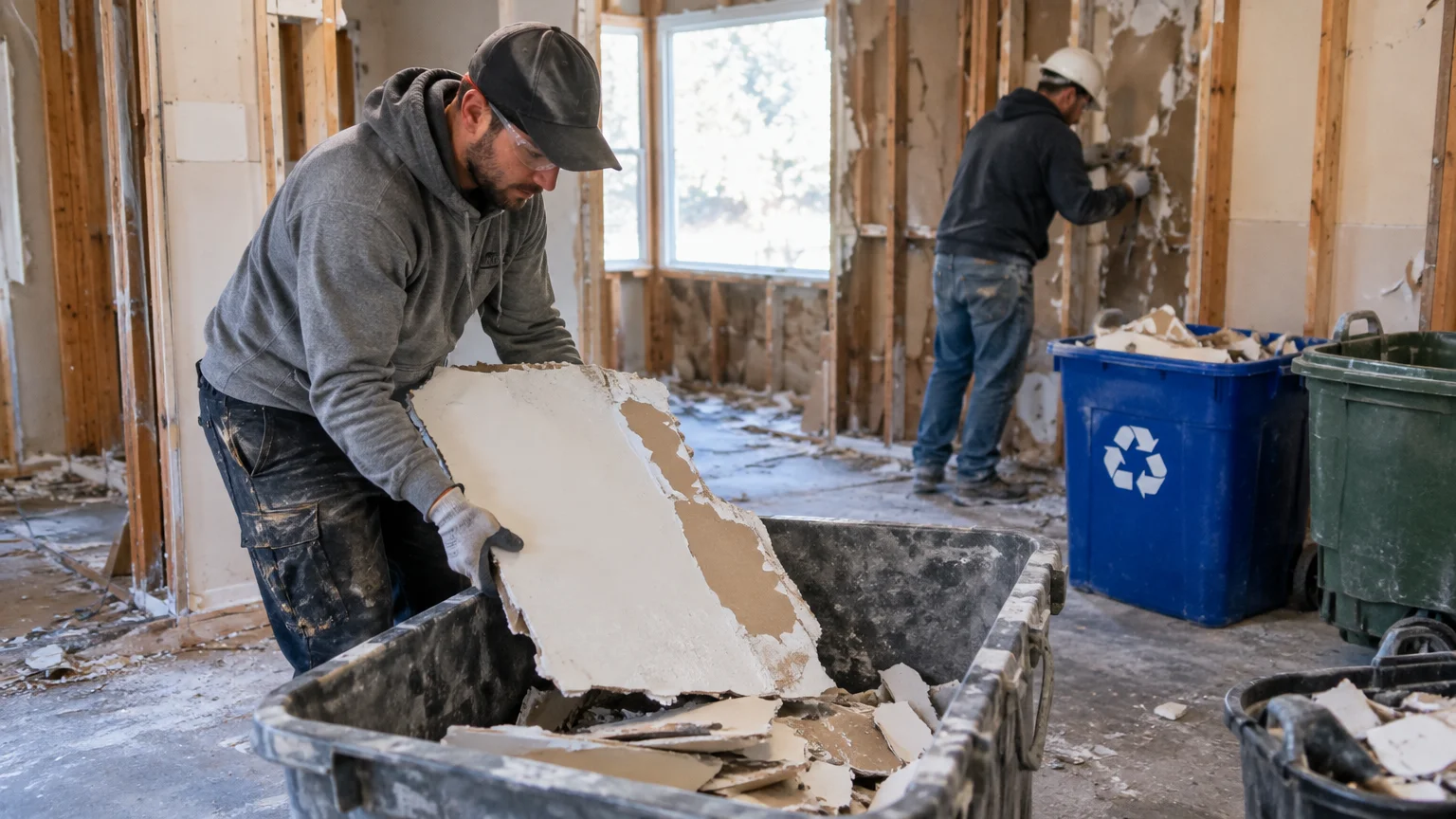
Removal work may include pulling down wall panels and breaking large pieces into safe sections. The crew then carries the debris to the truck or container. They check the area for scraps, screws, nails, and joint compound.
Complete cleanup matters because small debris can cause trips and slow the next work stage. The crew may also gather related renovation debris, such as wood trim, insulation, metal studs, or broken tile. Portsmouth New Hampshire Junk Removal can help Portsmouth homeowners and contractors decide which materials belong in one cleanup plan.
What Types of Drywall and Plaster Can Be Removed?
Most removal crews can handle common drywall, plaster, ceiling panels, and renovation tear-out debris. Materials should still be reviewed before work begins. Older buildings may have layers or products that need extra care.
Standard drywall, plaster, and joint compound
Standard drywall is also called gypsum board or wallboard. It has a gypsum core between paper layers and is common in homes, offices, and stores. Joint compound is the paste used to cover seams, screws, and corner joints.
Plaster is different from drywall. It is often harder, heavier, and attached to wood or metal lath. Lath is a support layer behind plaster. Removing plaster may create more dust and smaller pieces than removing modern drywall.
A crew may remove painted drywall, damaged panels, ceiling board, and pieces left from a remodel. They may also collect joint compound, corner bead, tape, and loose fasteners. The property owner should share details about the building’s age and planned tear-out.
Ceiling materials and renovation tear-out debris
Ceiling drywall may be removed during a remodel, water damage repair, lighting project, or room change. Ceiling work needs extra care because debris can fall from above. It may also require protection around lights, vents, and sprinkler parts.
A wider cleanup may include wood scraps, cabinets, flooring, insulation, metal, and broken fixtures. A junk removal crew can often gather these items when the service plan allows mixed construction debris. The crew should know about unusual materials before arriving.
Materials that may contain hazards need special handling. Suspected asbestos, lead paint, mold, chemicals, and other hazards should not go with normal debris. Testing and removal may require trained specialists under local rules.
How Is Drywall Removed Safely From a Home?
Safe drywall removal starts with preparation, controlled tear-out, and careful debris handling. Homeowners may handle simple sweeping and light cleanup. Large tear-outs can create dust, sharp waste, and hidden risks.
Preparing rooms, surfaces, and access points
Before work begins, clear furniture, decorations, and loose items from the area. Doorways and finished floors may need protective coverings. The path from the room to the loading area should stay clear.
Utilities also need attention. Workers should know where electrical wires, plumbing lines, heating ducts, and other systems may be located. A professional should not cut into a wall without checking for hidden services first.
Windows and doors can help air move through the room. Open windows do not replace dust control. Fans should not spread dust into clean rooms. Children, pets, and other people should stay away from the active work area until cleanup is done.
Managing dust, fasteners, and hidden hazards
Drywall dust is fine and can travel through a home. Workers may use masks, eye protection, barriers, controlled removal, and careful loading to limit its spread. Large panels should be handled in ways that protect walls, floors, and door frames.
Old drywall can hide nails, screws, sharp metal, broken wood, and damaged wiring. Plaster may fall in heavy pieces. Wet materials may also be heavier and harder to carry. These conditions can make a job unsafe for one person.
A homeowner does not always need a professional for light sweeping or carrying a few safe scraps. A professional is a better choice for full-room tear-outs, ceilings, stairs, large amounts, tight access, or unknown materials. Check the work area before anyone begins.
How Does Drywall Removal Work on a Construction Job Site?
On a construction site, drywall removal works best when it follows the project schedule. Contractors need clear access, planned cleanup, and safe paths for workers. Removal may happen during active work or after one phase ends.
Coordinating removal with contractors and remodelers
The owner, contractor, and hauling crew should agree on the work area before removal starts. They should discuss access points, parking, loading spots, debris types, and areas that must remain open.
Timing matters too. A cleanup crew may arrive after demolition, before new drywall goes in, or after a repair phase. Clearing debris at the right time helps keep walkways open and lets other trades continue.
Contractors should separate materials when the disposal plan requires it. They should also identify items that are not part of normal drywall hauling. Clear instructions help prevent delays and mixing of unsafe materials with regular debris.
Collecting debris from active and completed work areas
An active job site may have drywall scraps in many rooms. A finished area may have piles near an entry, driveway, garage, or loading zone. The crew can gather the debris, carry it out, and leave the area ready for the next task.
For larger projects, the crew may work in stages. One visit can clear a finished section while another handles the remaining tear-out. This can help contractors keep work areas open without moving the same debris more than once.
The main Portsmouth area includes Downtown Portsmouth and Atlantic Heights, along with Rye, Newington, Greenland, Kittery, and nearby communities. These areas have homes, offices, stores, rental properties, and other local sites. Portsmouth New Hampshire Junk Removal can work with project owners who need a clear plan for renovation debris hauling.
How Is Drywall Debris Sorted, Loaded, and Disposed Of?
Drywall debris is often sorted by material before loading and disposal. Sorting helps identify reusable, recyclable, restricted, and mixed waste. The final process depends on the local facility and the material’s condition.
Separating drywall from wood, metal, and mixed materials
A cleanup crew may separate drywall from wood, metal studs, cardboard, insulation, and general trash. Large pieces may be broken down so they fit safely in the truck. Sharp objects should be handled with care and kept from damaging other materials.
Wet drywall may need special attention because it can be heavy and may contain mold. Moldy material should not be disturbed without proper care. The source of the moisture should also be fixed before new wall materials are installed.
Mixed debris is common after kitchen remodels, bathroom updates, office build-outs, and whole-room renovations. A clear list of materials helps the crew prepare for the load. Property owners should mention appliances, fixtures, concrete, soil, or other heavy items before the visit.
Disposal, recycling, and local facility requirements
Some facilities accept clean gypsum drywall for recycling or special processing. Others accept it only under certain conditions. Local rules may also affect how mixed construction waste is handled.
The crew may take the load to a transfer station, recycling center, landfill, or another approved facility. The best option depends on the material, location, facility rules, and load condition. A professional service can help property owners avoid guessing about the right drop-off site.
Drywall should not be left beside a public road or placed in a container without checking local rules. The same care applies to plaster, insulation, paint cans, and demolition waste. Proper sorting supports safer hauling and cleaner work sites.
How Does Drywall Hauling Compare With Broader Construction Cleanup?
Drywall hauling focuses on wall and ceiling materials. Broader construction cleanup may include many kinds of renovation waste. The right service depends on what the project leaves behind and how much sorting it needs.
A drywall-only load may include panels, plaster, joint compound, tape, and fasteners. A wider cleanup may also include cabinets, flooring, wood, tile, metal, fixtures, packaging, and old appliances. A job site with mixed waste needs more planning than a small pile of clean drywall.
The removal method can also change from one project to another. One room may need careful indoor carry-out. A store renovation may need repeated loading from several areas. A post-project cleanup may focus on small scraps and sweeping after the main demolition is done.
Homeowners can often manage a small amount of clean, loose debris when they have a safe way to move it and a legal disposal option. They may need professional help when the material is heavy, spread across the property, mixed with other waste, or hard to access.
A crew can also help with related needs. These may include construction debris removal, renovation debris hauling, contractor junk removal, and job site cleanup. Portsmouth New Hampshire Junk Removal can review the material list and help match the cleanup plan to the project.
When Should You Hire a Professional Drywall Removal Service?
A professional drywall removal service makes sense when the project is large, dusty, heavy, time-sensitive, or hard to access. It can also help when the owner needs one crew to handle removal and hauling together.
Signs a project needs specialized hauling help
The following signs may point to a need for professional help:
- Drywall covers several rooms, ceilings, or floors.
- Debris must travel down stairs or through narrow walkways.
- The project includes plaster, insulation, metal, wood, or mixed waste.
- The debris contains sharp fasteners, heavy pieces, or wet materials.
- A contractor needs the site cleared before the next work phase.
- The property owner lacks a safe vehicle or legal disposal option.
A professional should also be considered when the wall condition is unknown. Older buildings may have materials that need testing or special handling. Suspected hazardous materials should go to the right qualified service.
What to prepare before scheduling removal
Before scheduling, identify the material type, amount, location, access points, and preferred timing. Photos may help explain the work area. A larger project may still need an in-person review.
The owner should remove personal items from the work zone and tell the crew about stairs, gates, parking limits, pets, tenants, or active business areas. Contractors should say whether the site is active and which spaces must stay open.
Clear details help prevent surprises on removal day. They also help Portsmouth New Hampshire Junk Removal plan a safer visit for homes and job sites across Portsmouth.
Key Takeaways
- A drywall removal service may include planning, tear-out, loading, hauling, and cleanup.
- Drywall, plaster, ceiling board, and renovation debris need different handling.
- Homeowners can manage light cleanup, but large or risky tear-outs need extra care.
- Sorting drywall from wood, metal, and mixed waste supports proper disposal.
- Contractors should plan removal around access, safety, and the next project phase.
Frequently Asked Questions
Can a junk removal crew take old drywall and plaster?
Many junk removal crews can take drywall, plaster, joint compound, and related renovation debris. The crew should know the material type before the visit. Suspected asbestos, lead, mold, chemicals, and other hazards may need separate testing or removal by qualified specialists.
Can homeowners remove drywall themselves?
Homeowners can often handle a small amount of safe, loose debris. Full-room tear-outs are different because they create dust, sharp fasteners, heavy pieces, and hidden risks. A professional drywall removal service can help when access is hard or the project includes ceilings, plaster, or mixed debris.
What happens to drywall after it is hauled away?
The load may be sorted at a transfer station, recycling center, landfill, or another approved facility. The final option depends on local rules and the material’s condition. Clean drywall may have different handling options than wet, moldy, painted, or mixed construction debris.
Can drywall removal include other renovation waste?
It may include other materials when the service plan allows mixed construction debris. Common examples include wood, metal, insulation, flooring, cabinets, fixtures, and packaging. The property owner should list these items before scheduling so the crew can plan for the full load.
How should a contractor prepare for drywall hauling?
The contractor should clear a safe path, identify the loading area, separate unusual materials, and share the project schedule. The contractor should also point out active work zones, locked areas, stairs, gates, and materials that must remain on site. These details support safer and smoother cleanup.
Conclusion
Drywall removal includes more than pulling panels from a wall. A complete service may cover planning, safe tear-out, dust control, loading, hauling, sorting, and final cleanup. The needs of one room can differ from those of a full renovation or active construction site.
Property owners and contractors should share clear details about the material, access, timing, and site condition. That information helps the crew prepare and keeps the next project step moving. For local help with drywall, plaster, and renovation debris, Contact us to arrange a removal plan with Portsmouth New Hampshire Junk Removal.
If you are not sure what you are dealing with, it is worth having someone look at it before it turns into a bigger job. Get in touch with Portsmouth New Hampshire Junk Removal today and we will tell you where you stand.